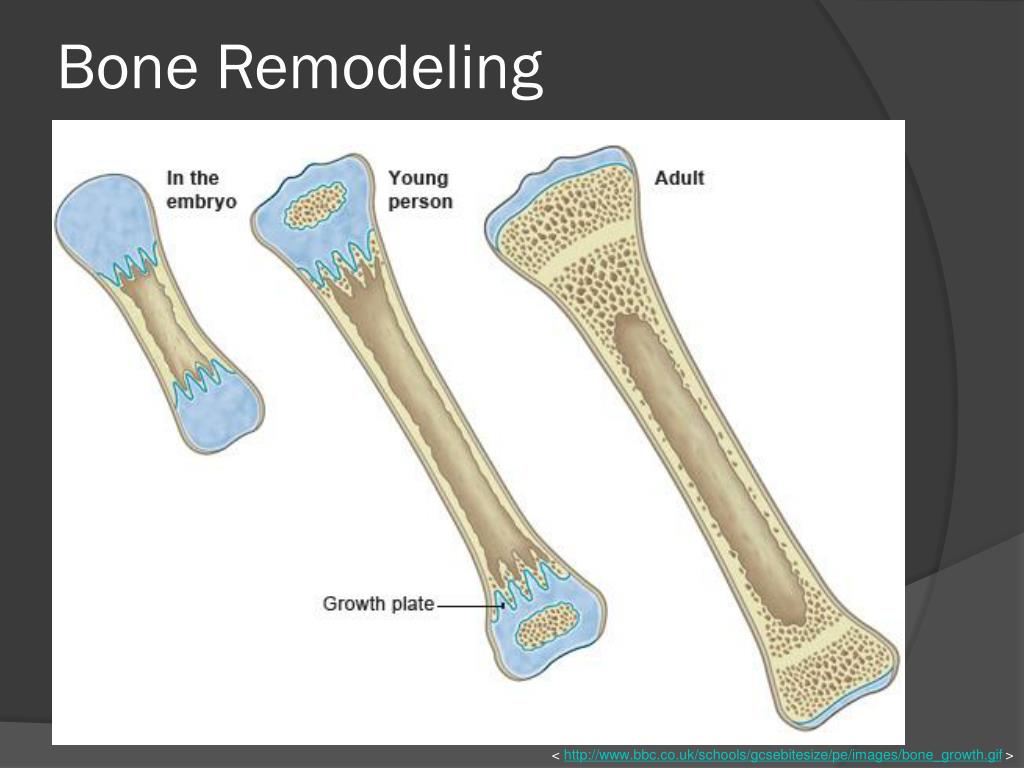
Bone growth vs remodeling Biology Diagrams It comprises two phases: bone formation and resorption. The balance between the two phases is crucial for sustaining bone mass and systemic mineral homeostasis. This review highlights recent work on physiological bone remodeling and discusses our knowledge of how systemic and growth factors regulate this process.

Disruptions in bone remodeling can lead to structural deficiencies or excessive skeletal growth. Osteoporosis occurs when bone resorption outpaces formation, reducing bone mass and compromising microarchitecture. This condition increases fracture susceptibility, particularly in the hip, spine, and wrist, where trabecular bone predominates. Bone Growth and Remodeling at the Growth Plate. The light micrograph demonstrates the zones of chondrocyte differentiation, as well as mineralization (black). The schematic representation shows the cellular events occurring at the growth plate in long bones. Note that bone formation in this process occurs by repeated Activation-Resorption

Physiology, Bone Remodeling Biology Diagrams
11.5 Bone Growth, Remodeling, and Repair. 11.6 Joints. 11.7 Disorders of the Skeletal System. 11.8 Case Study Conclusion: A Pain in the Foot. Bone growth ends. Figure 11.5.2 The ossification of cartilage in the human skeleton is a process that lasts throughout childhood in some bones. This page titled 14.5: Bone Growth, Remodeling, and Repair is shared under a CK-12 license and was authored, remixed, and/or curated by Suzanne Wakim & Mandeep Grewal via source content that was edited to the style and standards of the LibreTexts platform. The purpose of bone remodeling is to regulate calcium homeostasis, repair micro-damage to bones from everyday stress, and to shape the skeleton during growth. Bone growth factors affect the process of bone remodeling. These factors include insulin-like growth factors I and II, transforming growth factor beta, fibroblast growth factor, platelet

The rate of bone remodeling is very high during growth and then slowly decreases until peak bone mass is attained. In adulthood, the rate is highly variable and is influenced by age and genetics, as well as a number of modifiable factors such as physical activity, nutrition, hormonal activity, and medications.

11.5 Bone Growth, Remodeling, and Repair Biology Diagrams
bone remodeling, continuing process of synthesis and destruction that gives bone its mature structure and maintains normal calcium levels in the body. Destruction, or resorption, of bone by large cells called osteoclasts releases calcium into the bloodstream to meet the body's metabolic needs and simultaneously allows the bone—which is inhibited by its inorganic component from growing by